Published June 18, 2026 · Updated July 5, 2026
Normal White vs. Pure White Garlic: What's the Difference?
The two most traded Chinese garlic grades compared: appearance, flavor, allicin content, target markets, and typical price difference.
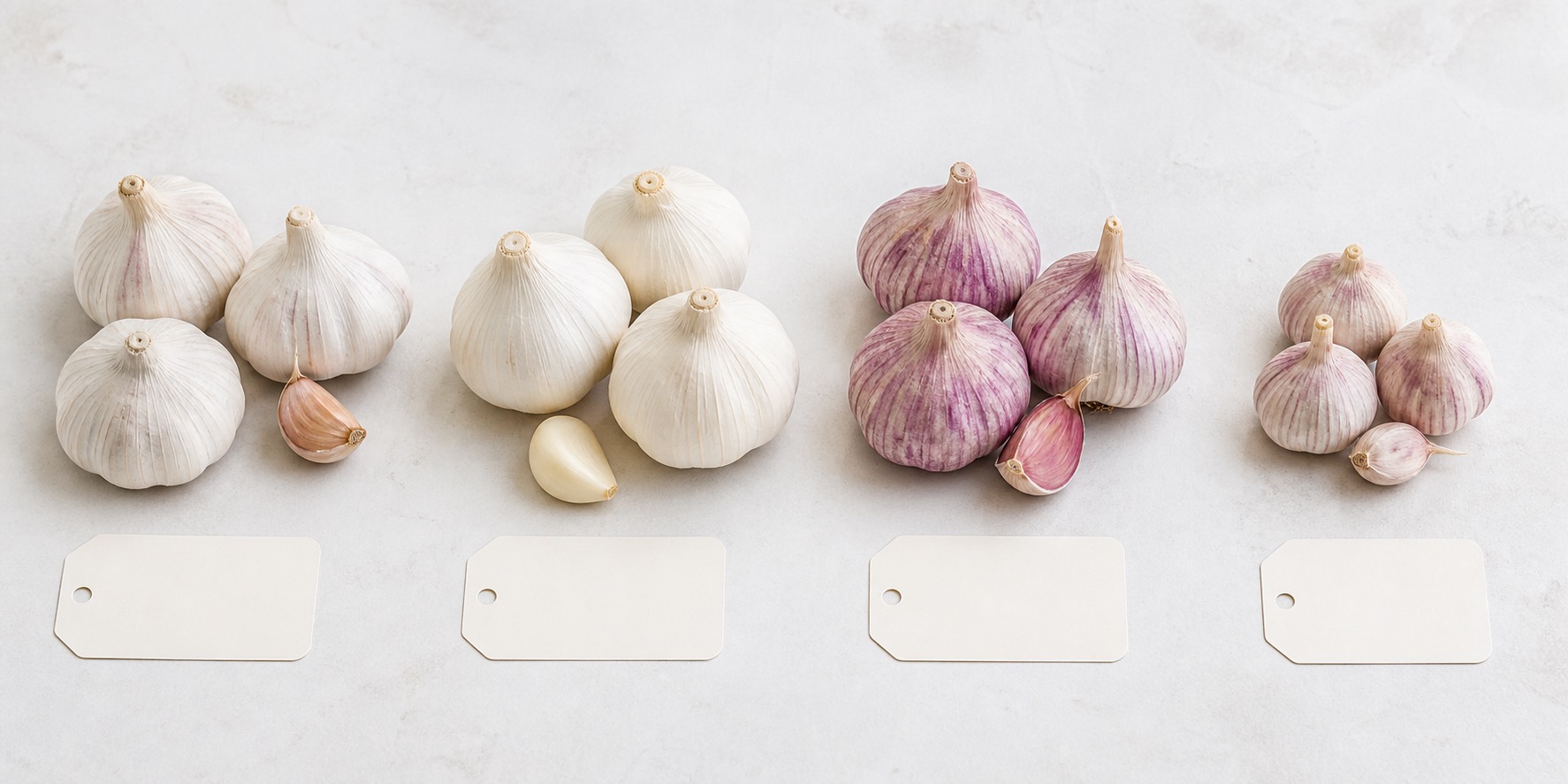
📷 Garlic variety comparison
/images/blog-garlic-varieties.jpg
Normal white garlic and pure white garlic are the two most traded fresh grades that leave Jinxiang, the Shandong county that handles more than 70% of China's garlic exports by volume. Both are the same species and grow in the same Yellow River alluvial soil. They differ in skin color, clove tightness, flavor strength, allicin content, and price. Buyers who confirm the right grade before ordering avoid paying a premium they do not need or shipping a look their retail market rejects. This guide sets out the differences and how to specify each one when you buy fresh garlic.
What Normal White Garlic Is
Normal white garlic (pu bai suan) is the highest-volume grade in the trade. The outer skin is white with visible purple striping, which is a natural mark of the variety and not a quality defect. The flavor is strong and pungent, and the bulb is available in the full range of size grades from 4.5 cm to 6.5 cm and up. Because supply is deep and the grade suits most cooking and processing uses, normal white garlic is the default choice for price-sensitive markets and for buyers who repack, dehydrate, or blend the product downstream.
What Pure White Garlic Is
Pure white garlic (chun bai suan) is the premium grade. The skin is clean white with no purple striping, the cloves sit tighter inside the bulb, and the allicin content runs higher than normal white. It ships in the same 4.5 cm to 6.5 cm and up size range, so the difference a buyer pays for is appearance and clove structure rather than size. The uniform white bulb photographs well on shelf and reads as top quality to end consumers, which is why European and Japanese retail programs specify it.
Normal White vs. Pure White Garlic: Side by Side
The table below sets the two grades against each other on the attributes buyers ask about most. Purple garlic (zi pi suan) is added as a reference point because it is the third common fresh grade and sits at the strong-flavor, high-allicin end of the range.
| Attribute | Normal White | Pure White | Purple / Red |
|---|---|---|---|
| Skin appearance | White with purple striping | Clean white, no striping | Purple to red skin |
| Clove structure | Standard | Tighter cloves | Smaller bulbs, firm cloves |
| Flavor | Strong, pungent | Strong, clean | Strongest, most pungent |
| Allicin content | Standard | Higher than normal white | High |
| Size range | 4.5-6.5 cm and up | 4.5-6.5 cm and up | Generally smaller |
| Price level | Base grade | Premium | Varies by market |
| Main markets | Price-sensitive markets, processing | Europe, Japan | Southeast Asia, Latin America |
Why Pure White Garlic Costs More
Pure white garlic sells at a premium over normal white for two reasons. First, sorting is stricter: bulbs must be uniform white with no striping, so a share of the crop is graded out at the packing table and moves to the normal white line instead. Second, demand from high-value retail markets keeps the premium grade tight. The two grades share the same size classes, so the premium reflects appearance, clove tightness, and higher allicin rather than a larger bulb. Both grades track the same underlying market, since Jinxiang moves a trading volume of 3 million tonnes a year and its auction center sets reference prices that ripple through the world garlic trade.
Which Grade Your Market Wants
Match the grade to how your buyers judge the product. The guidance below covers the common cases.
- Pure white for European supermarket programs and Japanese retail, where a clean, uniform white bulb is the shelf standard and the higher allicin is a selling point.
- Normal white for price-led wholesale, food service, and any buyer who repacks, peels, or processes the garlic, since the purple striping does not affect the finished product.
- Purple / red for Southeast Asian and Latin American markets that prefer the strongest flavor and the highest allicin, often in smaller bulbs.
If you are unsure, order both grades as samples and let your customers or your production line decide. We hold inventory in our own cold storage at -2°C to 0°C, so we can pull sample bulbs of each grade outside the harvest window. The full inspection and shipping process is documented on the supply chain page.
How to Specify the Grade in Your Order
A clear specification prevents disputes at the port. State each of these points in your inquiry and we quote against them exactly.
- Grade: normal white, pure white, or purple / red garlic.
- Size: choose from 4.5 cm, 5.0 cm, 5.5 cm, 6.0 cm, or 6.5 cm and up.
- Packing: mesh bags (5 kg, 10 kg, 20 kg), 10 kg cartons, or loose bulk.
- Certifications your destination market requires, such as Global GAP, HACCP, or an organic standard.
- Destination port and incoterm (FOB Qingdao, CIF, or CFR).
Our team inspects each lot in Jinxiang before loading and checks the skin color, size calibration, and clove condition against the grade you booked. The minimum order is one 40 foot container of fresh garlic, roughly 24-28 metric tonnes, and lead time is 7-15 days from order confirmation to port loading. To compare live pricing on either grade, request a quote with your specification and destination, and we reply within 24 hours.