Published June 25, 2026 · Updated July 5, 2026
Understanding China Garlic Export Pricing: FOB, CIF, and Market Dynamics
Garlic prices in China move with the Jinxiang spot market. Learn the seasonal cycle, what drives prices, and how FOB, CIF, and CFR quotes compare.
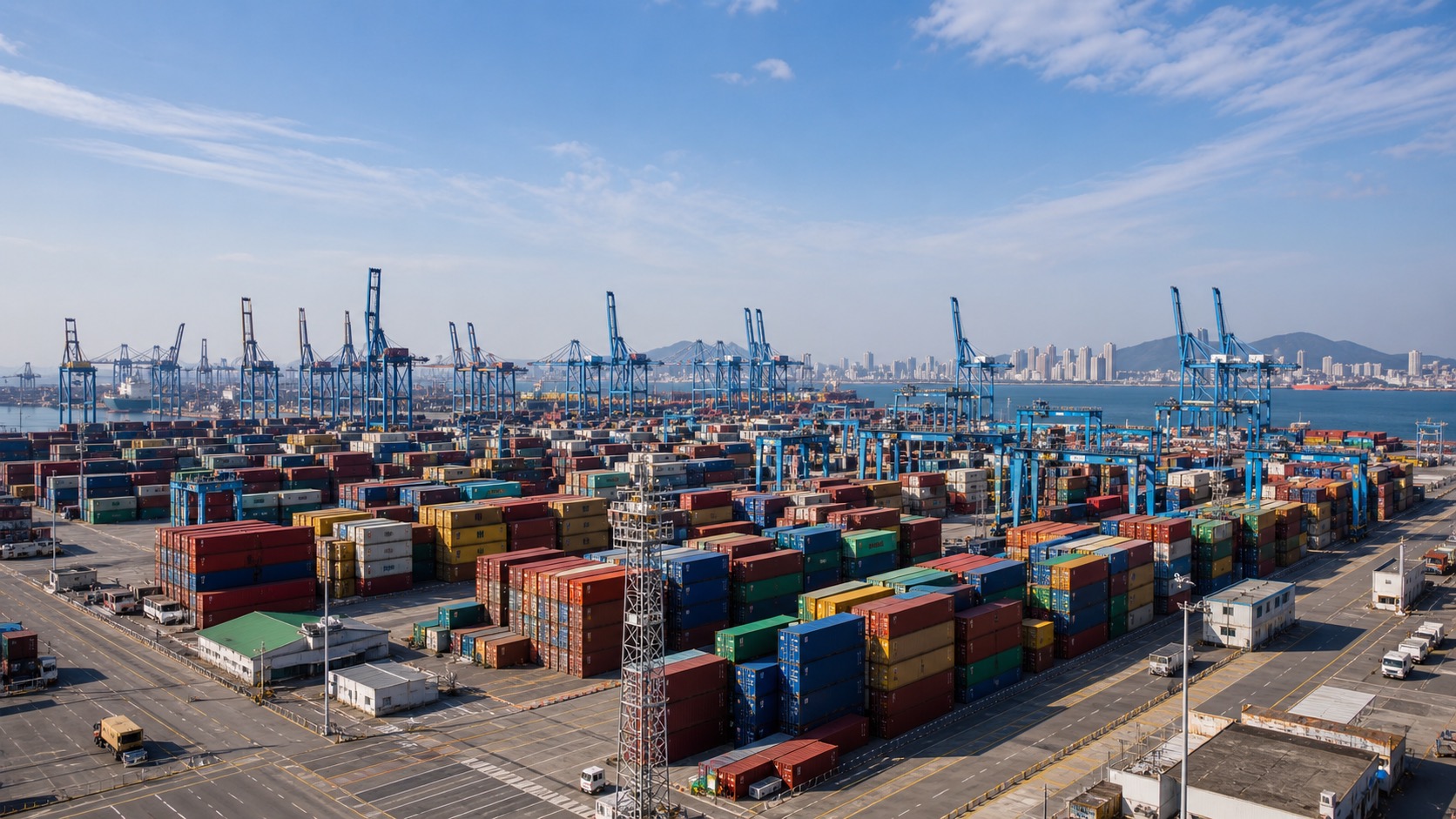
📷 Qingdao port terminal
/images/supply-qingdao-port.jpg
China garlic export prices are set in Jinxiang. The county trades more than 3 million tonnes of garlic a year and handles over 70% of China's garlic exports by volume, so the price agreed in its market becomes the reference price importers around the world pay. If you buy Chinese garlic, you are buying against the Jinxiang spot market whether your quote names it or not. This guide explains how that market works, what moves it through the year, and what FOB, CIF, and CFR actually cover in a quotation.
How the Jinxiang Spot Market Sets the World Garlic Price
Jinxiang concentrates supply, storage, and trading in one place, which is why its price discovery carries worldwide. Around 3 million tonnes change hands here annually across a dense network of traders, processors, and exporters. The National Garlic International Trading Market alone hosts 230+ garlic enterprises and 90+ logistics companies, and Jinxiang runs China's first agricultural product auction center with an AI-powered trading platform. When thousands of buyers and sellers transact the same crop in the same place every day, the resulting price is the number the rest of the trade quotes from.
For an importer, this has one practical consequence. A quote is only as current as the Jinxiang price behind it. A supplier who fixes a number for months is either padding it to cover their own risk or exposing themselves to a loss they will try to recover later. We quote against the live market instead, and we explain how below.
The Seasonal Price Cycle
Garlic is an annual crop, so its price follows a predictable calendar. Bulbs are planted in September and October and harvested in late May and June. New-crop garlic reaches the market from June, and the weeks around the harvest are when price discovery for the whole year happens. Once traders can see the size and quality of the incoming crop, the market finds its opening level.
After harvest, most of the crop moves into cold storage held at -2°C to 0°C, and the market shifts into what the trade calls the storage season. Prices through the rest of the year track how much garlic sits in store against how fast it is being drawn down for export and domestic use. A large crop and full warehouses keep prices soft; a short crop or heavy early demand tightens them. Because Jinxiang and the surrounding region hold more than 5 million tonnes of cold storage capacity, buyers can source the previous crop year-round rather than only in the weeks after harvest.
| Period | What happens | Price behaviour |
|---|---|---|
| September to October | New crop planted | Prices reflect the current stored crop |
| April | Green garlic scapes harvested | Early read on the coming crop |
| Late May to June | Bulbs harvested, new crop arrives | Annual price discovery, highest volatility |
| June onward | Crop moves into cold storage | Storage-season pricing begins |
| July to next May | Cold-stored crop drawn down | Price tracks inventory against demand |
What Moves Garlic Prices
Four forces set the level of the Jinxiang market at any point in the year. Reading them tells you whether a quote is likely to rise or fall before your order ships.
- Planted area. Growers respond to last year's prices. A profitable year pulls more land into garlic, expands the next crop, and softens prices; a loss-making year shrinks the area and tightens the following season.
- Weather. Frost, drought, or heavy rain during the growing and harvest window changes both yield and grade. A weather-hit crop with fewer large bulbs lifts prices for premium sizes in particular.
- Storage inventories. The volume of garlic held in the region's cold stores is the single clearest signal for the storage season. Traders watch it closely because it shows how much supply is left before the next harvest.
- Export demand. Jinxiang serves 170+ countries, so buying from any major region moves the price for everyone. A strong ordering season abroad draws down inventory faster and firms up quotes across all destinations.
FOB, CIF, and CFR: What Each Quote Includes
Once you have a garlic price, the Incoterm decides what else is bundled into the number. We quote FOB Qingdao, CFR, or CIF to any destination port. The table below shows who arranges and pays for each leg, and where risk passes from us to you.
| Item | FOB Qingdao | CFR (port) | CIF (port) |
|---|---|---|---|
| Goods, export packing, inland haulage to port | Included | Included | Included |
| Export clearance and documents | Included | Included | Included |
| Ocean freight to destination port | Buyer arranges | Included | Included |
| Marine insurance in transit | Buyer arranges | Buyer arranges | Included |
| Risk passes to buyer | On loading at Qingdao | On loading at Qingdao | On loading at Qingdao |
| Import duty and delivery from arrival port | Buyer | Buyer | Buyer |
FOB Qingdao gives you the cleanest view of the garlic price because freight and insurance are stripped out, and it suits buyers who already have a freight contract. CFR folds in the ocean freight, and CIF adds marine insurance on top. Under all three, risk transfers when the container is loaded at Qingdao, which is four hours by road from our Jinxiang cold storage. The full document set, container types, and port options are set out on our Supply Chain page.
Why Weekly-Indexed Pricing Beats a Fixed Long Quote
A garlic quote held fixed for months is a bet against a market that moves every week. When the market falls, you overpay against the fixed number. When it rises, the supplier who quoted it looks for ways to renegotiate or to trim grade. Neither outcome serves a buyer who wants a fair, current price.
We index our quotes to the real-time Jinxiang market and update them weekly. You get the price that today's market supports instead of a stale number with a risk margin baked in. This applies across the range, from Fresh Garlic sold by size grade to processed lines such as Dehydrated Garlic, where flakes trade as their own commodity with transparent pricing. Because we hold our own cold storage, we can also time loading against the market and lock a price once you confirm.
How to Get a Current Garlic Quote
Send us the product, size grade or specification, quantity, destination port, and the Incoterm you want to compare on. We price it against this week's Jinxiang market and reply within 24 hours, so you are always working from a live number rather than a guess. When you are ready, request a quote and we will index it to the market and hold it once your order is confirmed.