Published July 1, 2026 · Updated July 5, 2026
Black Garlic: Production Process, Health Benefits, and Global Market Trends
Black garlic is fresh garlic transformed by 60-90 days of controlled heat and humidity. Here is how it is produced, why buyers want it, and where the market is heading.
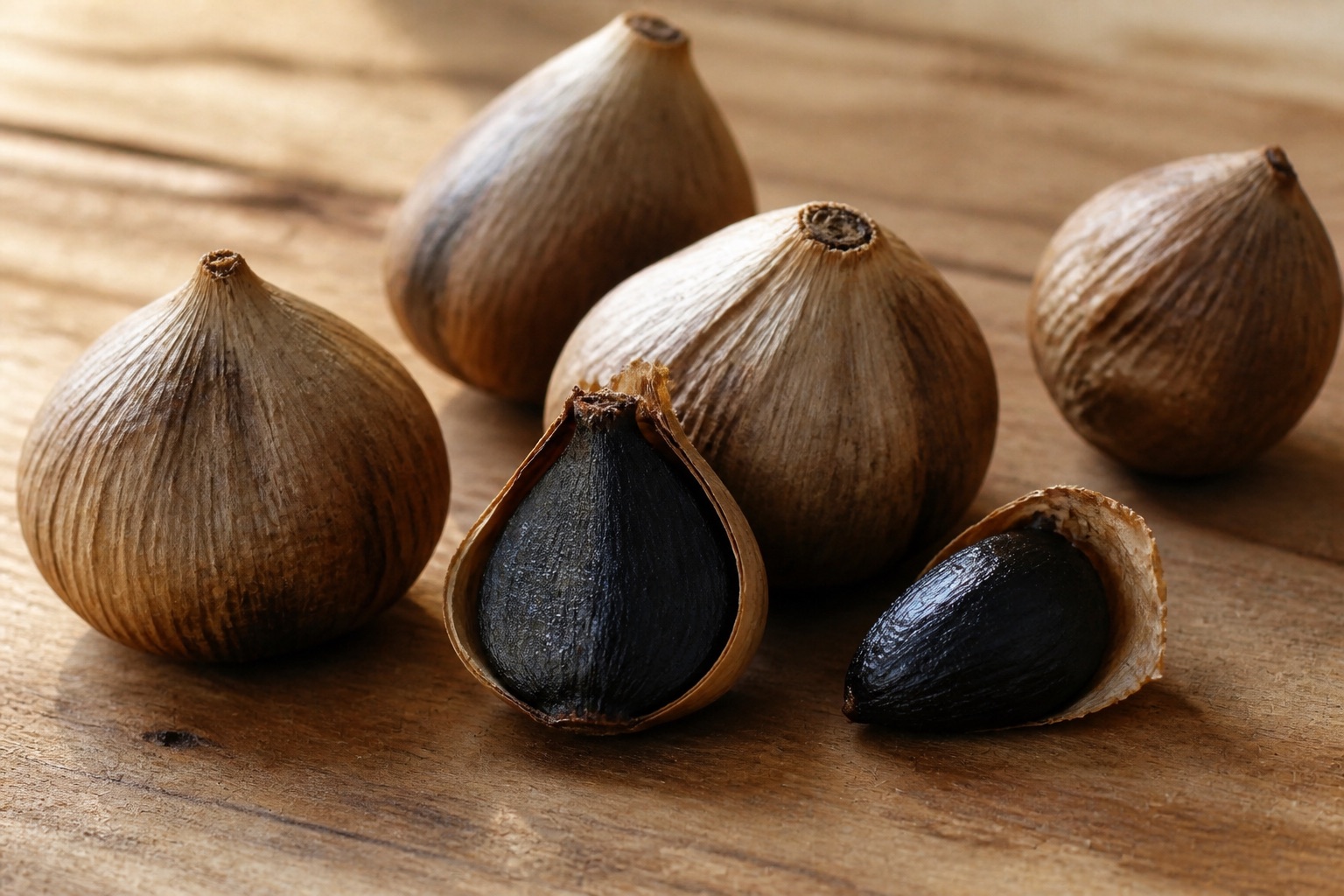
📷 Solo black garlic bulbs
/images/product-black-garlic-solo.jpg
Black garlic is fresh garlic that has been held at controlled temperature and humidity for 60-90 days until the cloves turn soft, dark, and sweet. There is no smoke, no dye, and no additive. The color and flavor come from the raw bulb slowly transforming under steady heat. The result is a product with none of the pungency of fresh garlic and a taste closer to balsamic, dried fruit, and molasses. This guide explains how black garlic is produced, what changes inside the clove, how the main formats differ, and where global demand is heading for buyers sourcing from Jinxiang.
What Black Garlic Is
Black garlic starts as whole bulbs of fresh garlic. For the retail-ready product, solo garlic is the most common format because each bulb contains one smooth clove instead of a segmented head. Multi-clove black garlic is available, but solo black garlic gives a cleaner portion and a better shelf presentation. Jinxiang sits at 35°N on the Yellow River alluvial plain, and its mineral-rich loam produces bulbs with the high solids that hold up through a long fermentation.
The word fermentation is used by convention in this category. The transformation is driven mainly by controlled heat rather than by microbial cultures, so some producers call it aging or enzymatic browning. Whatever the label, the process is the same: whole bulbs, steady warmth, steady moisture, and time.
How Black Garlic Is Made
Solo bulbs are held in temperature-and-humidity-controlled chambers for 60-90 days. Temperature and moisture are kept within a narrow band for the full cycle, and the exact profile is what separates a good producer from an average one. Too hot and the cloves scorch and turn bitter. Too cool and the bulbs never darken or develop sweetness. The long hold is what drives the Maillard reaction, the same browning chemistry that gives roasted coffee and seared meat their color and depth.
Because the process runs for two to three months per batch, black garlic needs reliable chamber capacity and consistent power. Jinxiang has both. The county holds 5,000+ standard cold storage facilities and 5M+ tonnes of regional cold storage capacity, and its 128 above-scale processing enterprises run the controlled-environment chambers that black garlic production depends on. We match each black garlic order to a plant with the chamber capacity and certifications the buyer needs, then inspect the finished lot before it ships.
What Changes Inside the Clove
The changes during aging are chemical and physical. Fresh garlic owes its sharp bite to allicin, which forms when raw cloves are cut or crushed. Over the long warm hold that pungency disappears, which is why black garlic tastes mellow and can be eaten straight from the bulb. As the sharp compounds break down, a water-soluble compound called S-allyl-cysteine becomes more prominent, and the concentration of antioxidant compounds rises. Sugars and amino acids react through Maillard browning to produce the dark color and the sweet, savory flavor.
- Pungency: the raw allicin bite fades, leaving a mild sweet-savory taste.
- S-allyl-cysteine: this water-soluble compound becomes more prominent as the cloves age.
- Antioxidant compounds: their concentration increases relative to fresh garlic.
- Color and texture: Maillard browning turns the cloves dark; they soften to a chewable, date-like consistency.
A note on health claims. Black garlic has been studied for its antioxidant properties, and that is the honest way to describe it. It is a food, not a medicine, and responsible suppliers do not market it as a treatment or a cure. When you write retail or supplement copy, keep the language to what the research supports and check the rules of your destination market before making any nutrition or health statement on a label.
Formats and Buying Specifications
Black garlic ships in several formats, each aimed at a different buyer. Solo black garlic bulbs suit gourmet retail and gift packs. Peeled cloves are the convenience format for food service and ready-meal producers. Juice and extract are concentrated liquids for beverage, sauce, and supplement makers. The table below compares the main options. Our full Black Garlic & Fermented Products range also covers zero-additive garlic paste and traditional pickled and Laba garlic.
| Format | Processing | Typical Buyer | Notes |
|---|---|---|---|
| Solo black garlic bulbs | 60-90 day fermentation, sold as intact single-clove bulbs | Gourmet retail, gift and specialty packs | Common retail format; clean single-clove presentation |
| Peeled black garlic cloves | Fermented, then peeled and vacuum-packed | Food service, ready-meal manufacturers | Ready to use with no peeling labor |
| Black garlic juice / extract | Concentrated into a liquid format | Beverage, sauce, and supplement makers | Delivers flavor and compounds without solids |
When you place an order, specify the parameters that decide quality and price. The most important are moisture and texture. Ask for target moisture so the cloves stay chewable rather than dry and hard or wet and sticky. Confirm clove firmness, color uniformity, and the absence of additives. Then set the retail-facing details: solo bulb size grade, pack format, and any private-label artwork.
- Moisture and texture: the single biggest driver of eating quality; agree a target range in writing.
- Format and grade: solo black garlic bulbs by size grade, peeled cloves, or juice and extract.
- Additive status: confirm a clean label with no preservatives, colorings, or flavorings.
- Packaging: vacuum packs for peeled cloves, retail cartons or gift boxes for solo bulbs.
- Certifications: HACCP, ISO 22000, BRC, Kosher, and Halal are available from our processing partners.
Global Market Trends
Demand for black garlic has moved out of specialty stores and into mainstream gourmet retail, health-food aisles, and the supplement category. Chefs use it for its sweet umami depth, retailers stock it as a premium condiment, and supplement brands buy extract for its antioxidant positioning. The three largest pulls are gourmet retail in Europe and North America, the health and supplement trade across all regions, and steady culinary demand across Asia.
For buyers, the sourcing question is supply security. A 60-90 day production cycle means a plant cannot react to a rush order overnight, so it pays to work with a partner that plans chamber capacity ahead of your season. From Jinxiang we hold firm raw bulbs in our own cold storage at -2°C to 0°C, feed black garlic production on a schedule, and ship finished product through Qingdao Port, four hours away by road. Read how we manage inspection and export on our supply chain page.
Black garlic rewards a buyer who specifies clearly and a supplier who controls the process end to end. Send us your target format, moisture, pack, and certification requirements and we will match your order to the right Jinxiang plant, verify the lot in person, and quote against your exact specification. Request a quote and we reply within 24 hours.